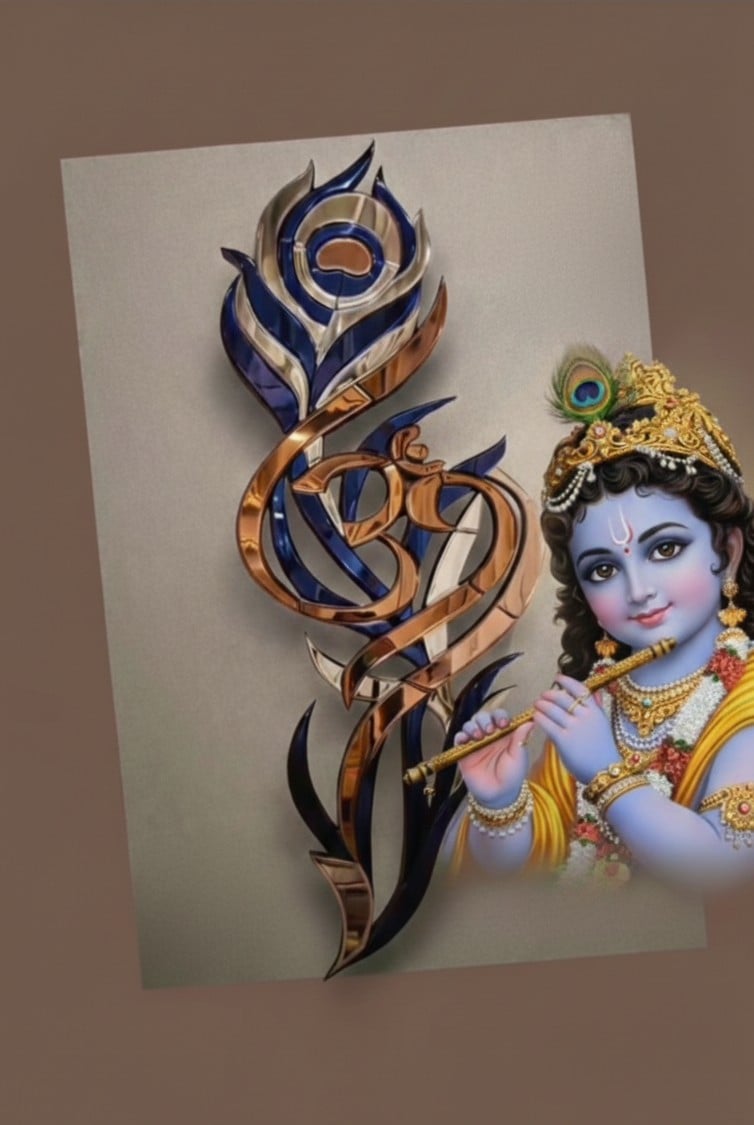
Glass Wall Art
The peacock feather is perhaps one of the most recognizable motifs in art history, carrying a weight of symbolism that transcends mere aesthetic beauty. When rendered in the medium of glass wall art, this singular plume of Glass Wall Art becomes more than a decoration; it becomes a luminous tribute to the presence of Krishna. Through the interplay of light, color, and transparency, glass captures the essence of a figure defined by grace, wisdom, and an unbreakable bond with the natural world.
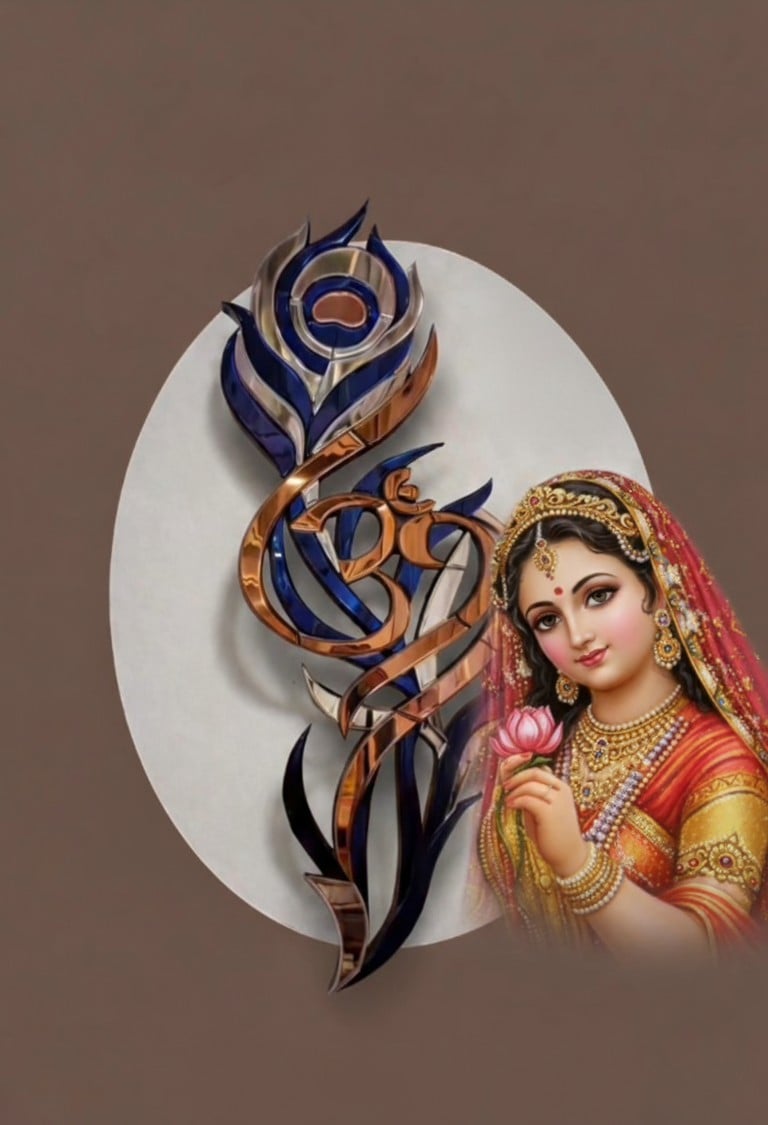
radhe Glass Wall Art
The Dance of Light and Color
At the heart of any peacock feather is the "eye," a mesmerizing concentric pattern of deep blues, iridescent greens, and shimmering golds. In glass art, these colors are not merely painted on; they are fused within the material itself. Using techniques like kiln-firing or hand-blown glass, artists can replicate the microscopic structures of a real feather that cause light to scatter and shimmer.
When light hits a glass feather mounted on a wall, the piece undergoes a transformation. During the morning, the deep cobalts might appear solid and grounding. As the sun moves, the glass catches the rays, casting long, translucent shadows of emerald and amber across the room. This shifting nature of light mirrors the personality of the one who famously wore the feather in his crown—a figure known for his multifaceted nature, his playfulness, and his ability to reflect the emotions of those around him.
A Symbol of Totality and Protection
In the stories of the flute-player of Vrindavan, the peacock feather was a gift—a tribute from the birds themselves who were so moved by his music that they danced until they shed their plumage in gratitude. By placing this symbol on a wall, the art serves as a reminder of that harmonious connection between the individual and the universe.
The "eye" of the feather is often interpreted as a symbol of omnipresence. It suggests an awareness that sees beyond the physical realm, watching over a space with a gaze that is both piercing and compassionate. In a modern home, this piece of art acts as a silent guardian. It doesn't need to speak to command attention; its presence creates an atmosphere of stillness and protection, echoing the way the feather-wearer was said to protect his community from the storms of life.
The Materiality of Glass
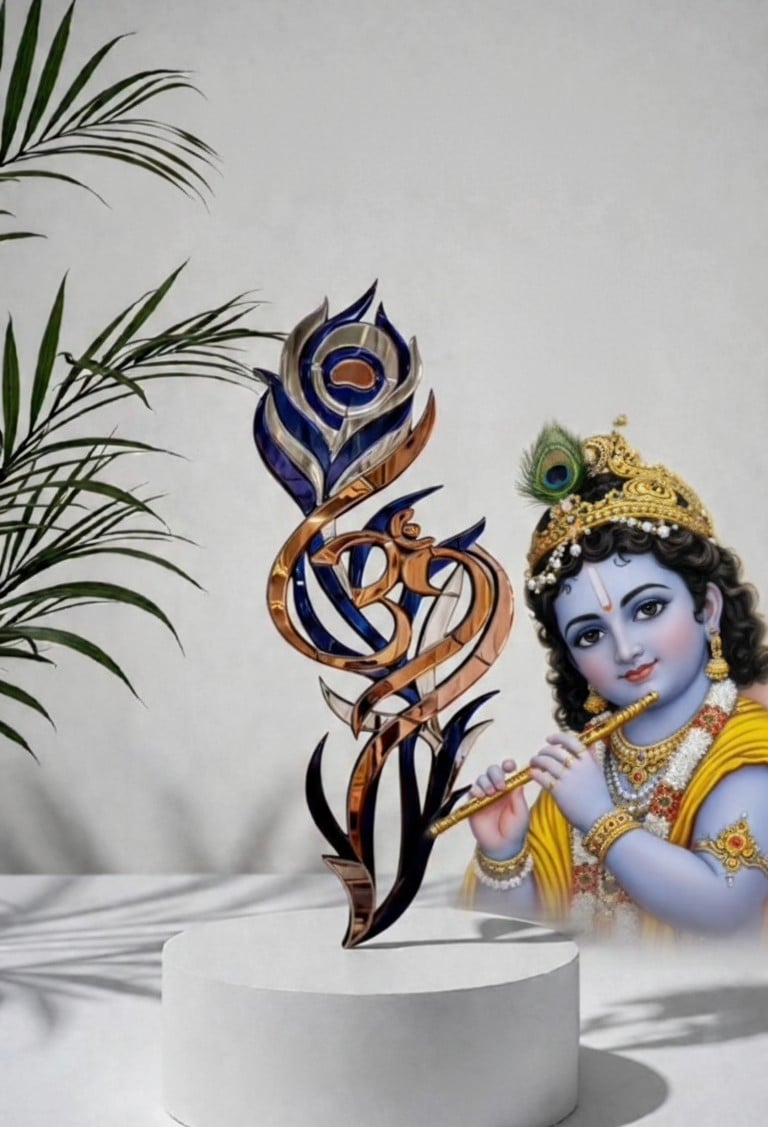
Krishna Glass Wall Arts
Choosing glass as the medium for this symbol is a deliberate stylistic choice. Glass is a material of contradictions:
-
Strength: It can endure for centuries without losing its color.
-
Fragility: It requires care and respect, much like the delicate balance of the soul.
-
Transparency: It allows us to see through it, representing the clarity of mind and the removal of illusions.
By shaping glass into the soft, organic curves of a feather, the artist reconciles the hardness of the material with the softness of the subject. This reflects the duality of the character it represents—one who was a fierce protector and a master of strategy, yet remained fundamentally defined by his gentleness and his love for beauty.
Aesthetic Integration in Modern Spaces
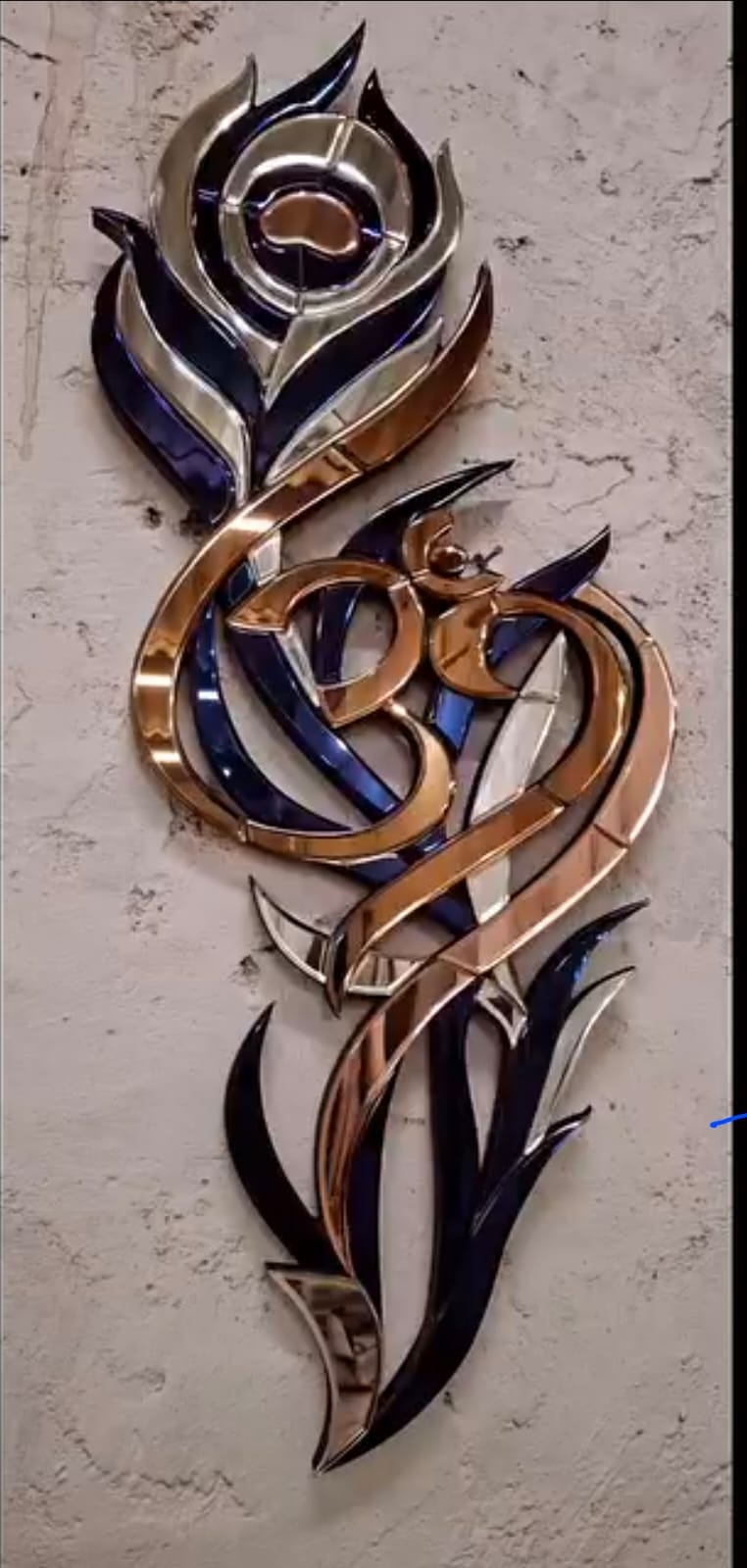
Krishna Glass Wall Art
A glass peacock feather is a versatile centerpiece. Because it avoids the overt traditionalism of a statue, it fits seamlessly into contemporary interiors. It offers a "sophisticated spirituality"—a way to acknowledge a deep cultural and philosophical heritage without cluttering a room with heavy iconography.
The teardrop shape of the feather provides a natural flow to a wall, drawing the eye upward. It serves as a focal point for meditation or simply as a visual anchor in a busy world. The vibrant blues—often associated with the depths of the ocean or the vastness of the midnight sky—evoke the very skin tone of the flute-player, suggesting his presence through color theory rather than literal depiction.
The Legacy of the Plume
To hang a peacock feather made of glass is to invite an ancient narrative into a modern setting. It is a celebration of the arts, of music, and of a philosophy that finds the extraordinary within the ordinary. It represents a life lived with color, a refusal to fade into the grayness of mundane existence.
Every time the light catches a ripple in the glass or highlights a streak of gold leaf embedded in the "eye," it serves as a subtle nod to the one who danced in the rain forests of India. It is a tribute to a figure who taught that life is a play, a song, and a dance—and that we are all, in some way, part of that magnificent performance.
https://shopps.in/product/glass-wall-art/


No comments:
Post a Comment